Image generation that means SDK lock-in
Most image APIs wrap rendering behind client libraries, version churn, and vendor-specific concepts.
Design a canvas once, then render infinite variations with GET query parameters or POST JSON overrides. The URL is the API: cache-friendly, deterministic, and portable across any stack.
Most image APIs wrap rendering behind client libraries, version churn, and vendor-specific concepts.
Spinning up Puppeteer per image to render HTML is slow, expensive, and impossible to cache.
When layouts live in code, every copy tweak becomes a pull request.
Every canvas renders at a permanent URL. Query parameters override dynamic layers — ?title=Launch+week&price=$29 — and a POST with a JSON body overrides everything else.
The same URL and parameters always render the same pixels, served with long-lived immutable caching — safe for CDNs and high-traffic pages.
Designers and developers share one canvas file: layout and styling are visual, data stays in your URL or POST body.
01
Build your layout in the editor and toggle "allow override" on the layers your data should control.
02
Each dynamic layer exposes a sanitized param id — the override fields panel lists every key with its type.
03
Compose URLs in your templates, or POST a JSON overrides body for richer payloads. Treat the image like any other asset URL.
Take the canvas\u{2019}s public image URL and append query parameters that match your dynamic layers\u{2019} param ids, like ?title=Launch+week&author=Ada. The response is the rendered image — you can use it directly in an img tag, a meta tag, or an API response.
GET query parameters are ideal for cacheable, linkable images — perfect for OG tags. A POST with a JSON body of overrides supports larger payloads and beats query params when both are present.
Every canvas renders as webp (default), png, or jpeg, from any size up to 10,000 pixels per side. Open Graph and Twitter card intents are available for social previews.
Yes. Renders are deterministic and served with immutable long-lived caching keyed by the canvas version, and each save publishes a fresh URL so you control when caches roll over.
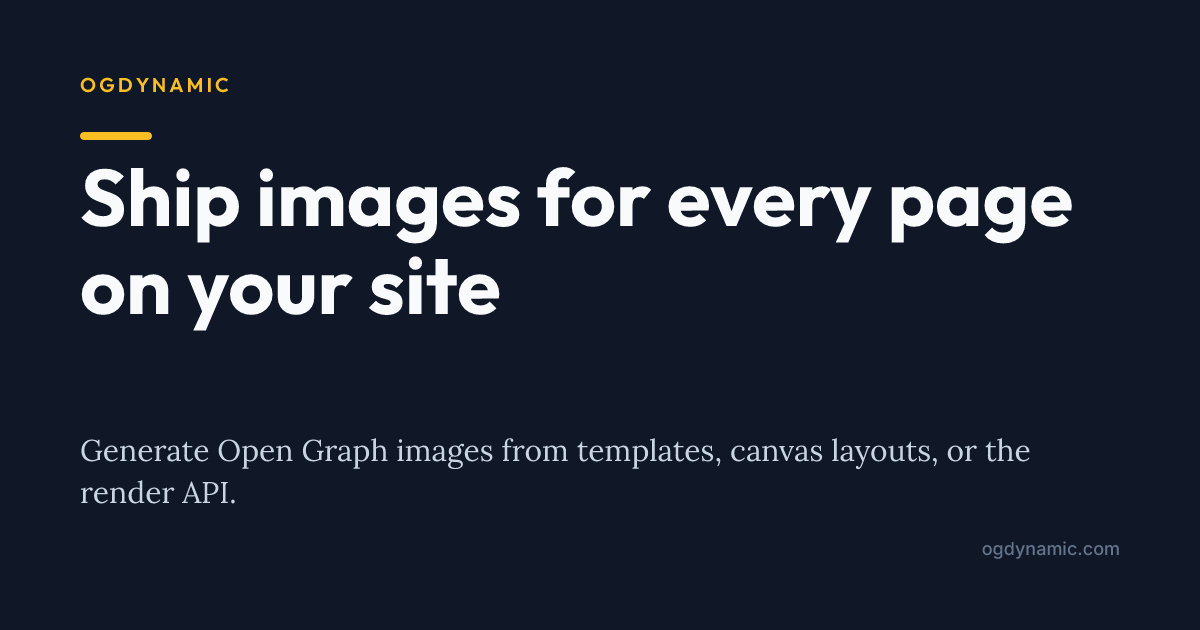
Design one branded OG template, mark the dynamic fields, and generate a unique social preview for every URL — rendered straight from the image URL itself.
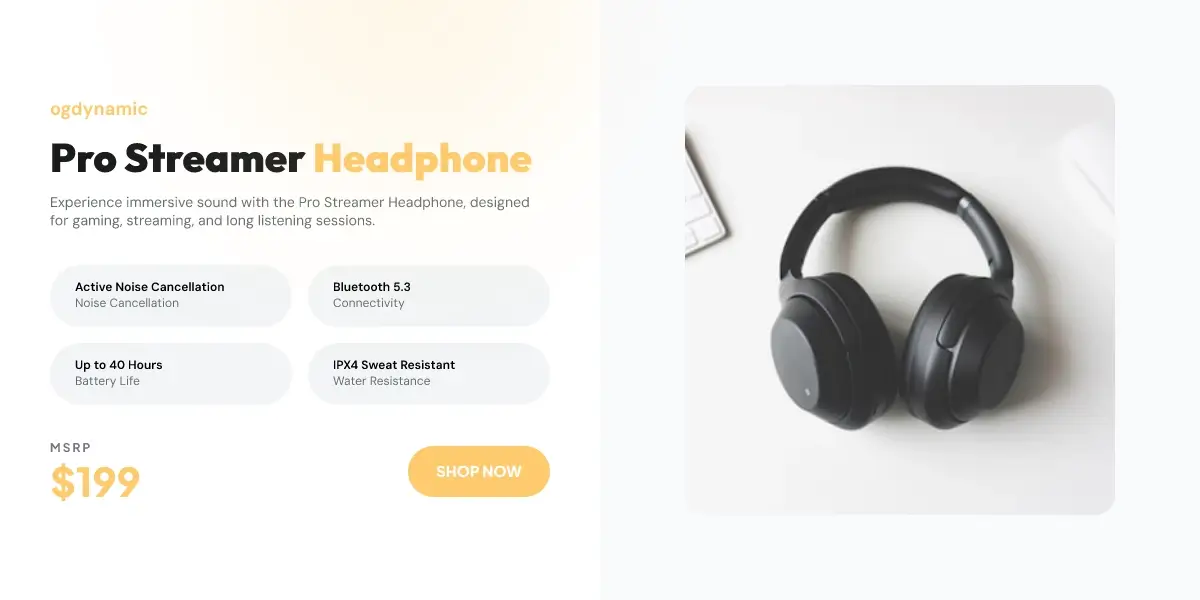
Show the name, price, photo, and promo that make shoppers click — generated for every product URL from a single branded template.
Design once, then render every dynamic image api from a URL.
Create a free account