One fallback image for the whole site
When every shared link shows the same logo card, pages lose the context that earns the click.
Design one branded OG template, mark the dynamic fields, and generate a unique social preview for every URL — rendered straight from the image URL itself.
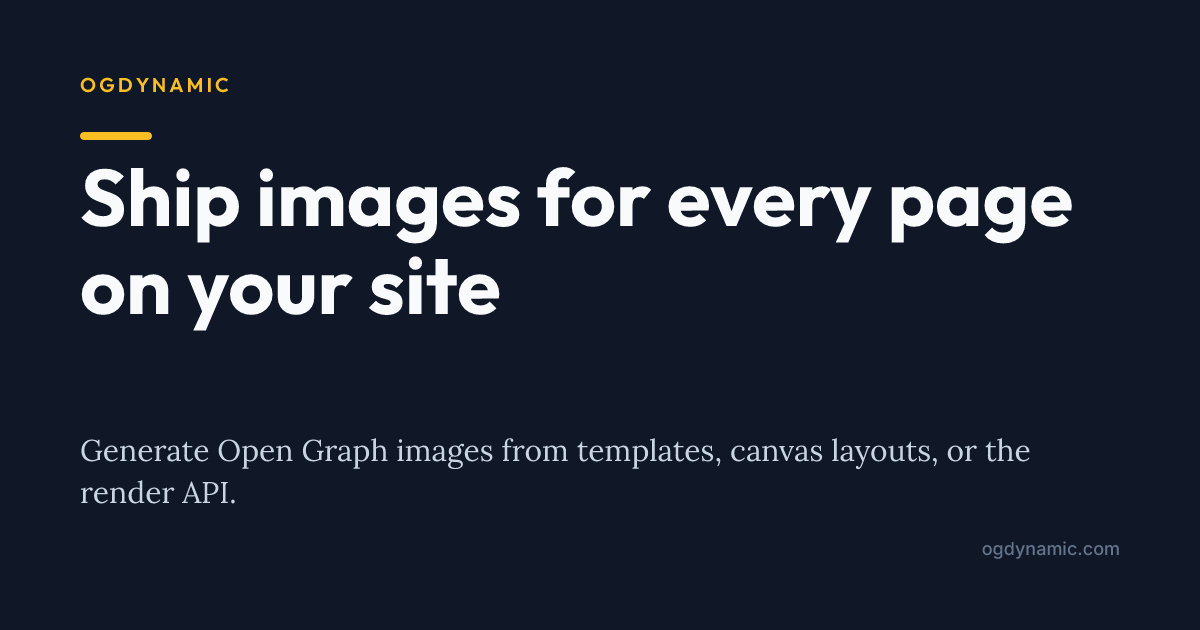
When every shared link shows the same logo card, pages lose the context that earns the click.
Designing a preview image per page does not scale past a handful of posts — and it is always out of date.
X, LinkedIn, Facebook, and Slack all crop differently, so unmanaged previews look broken somewhere.
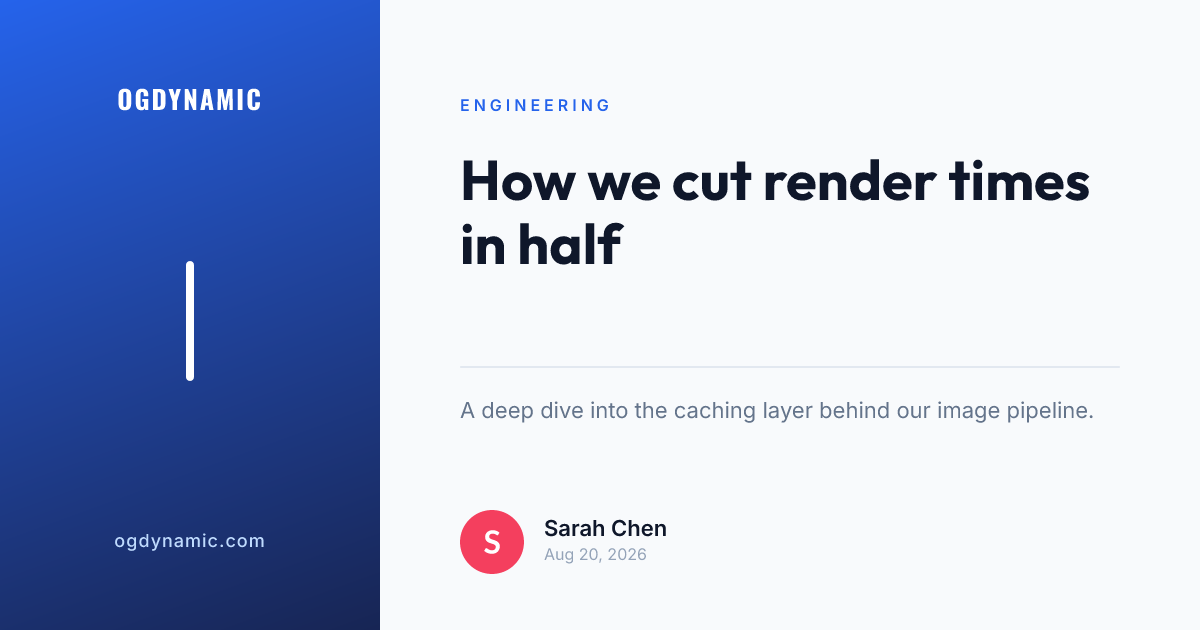
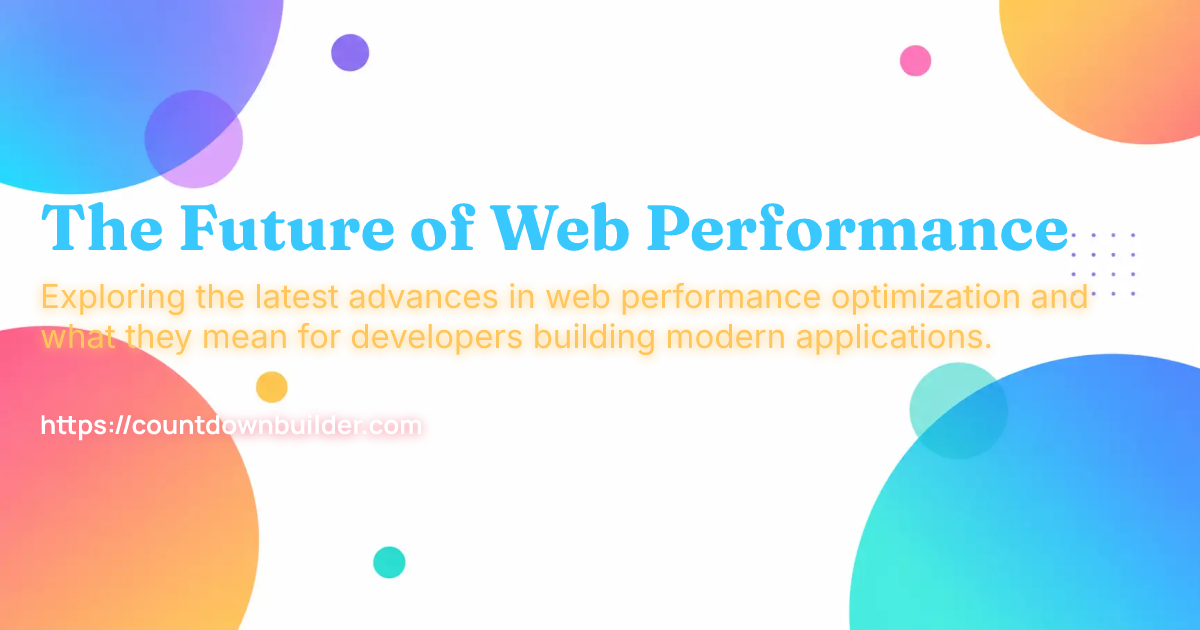
Every canvas gets a permanent image URL. Query parameters like ?title= and ?author= swap dynamic layers on each render.
Layers, nested groups, flexbox and grid layout, gradients, and Google Fonts — the canvas editor is a real design tool, not a form.
Templates are sized for the Open Graph standard, with a Twitter render intent for X-optimized cards from the same design.
01
Start from a 1200×630 Open Graph template or an empty canvas at any custom size.
02
Toggle "allow override" on title, description, or image layers and give each a param id like title or author.
03
Drop the image URL with query params into your head tags — every page gets its own branded preview.
An Open Graph (OG) image is the preview image social networks and chat apps show when someone shares a URL. It is defined by the og:image meta tag, and 1200×630 pixels is the recommended size.
You design a template once and mark which layers are dynamic. Each render URL accepts query parameters — like ?title=Launch+week — that replace the marked text and images, so every page can have its own OG image without any design work.
Canvases render as webp, png, or jpeg. Renders are deterministic and served with long-lived immutable caching, and every save publishes a fresh URL so old links keep working.
Yes — the free OG Checker tool on this site inspects any URL and reports its Open Graph and Twitter card tags, including missing or suboptimal images.
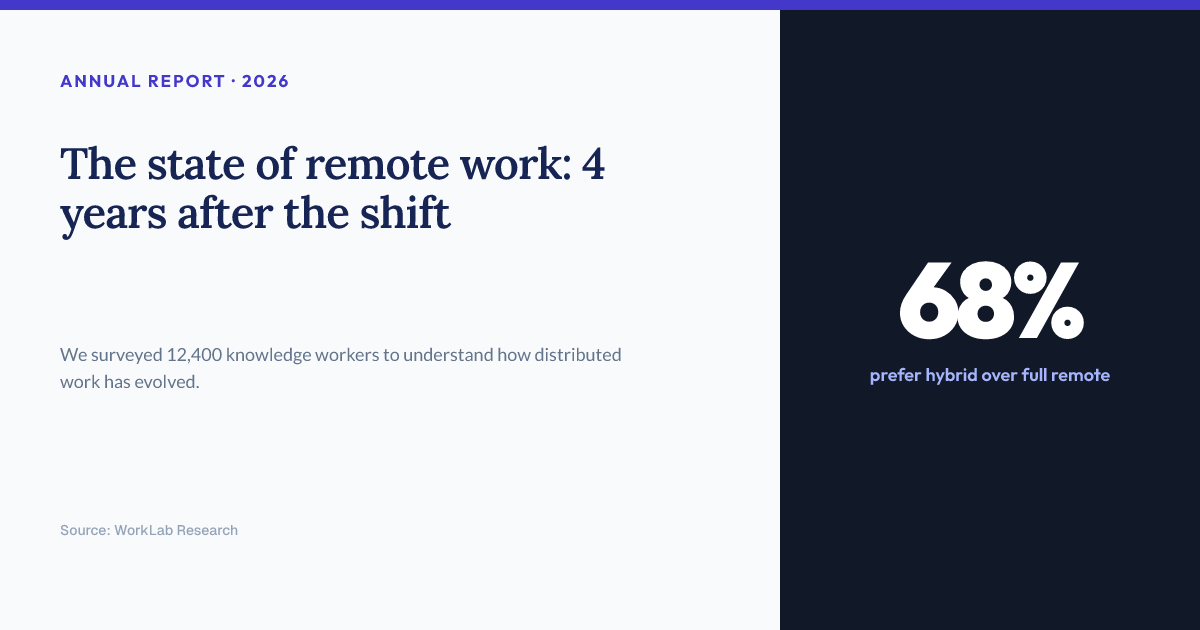
Design a canvas once, then render infinite variations with GET query parameters or POST JSON overrides. The URL is the API: cache-friendly, deterministic, and portable across any stack.
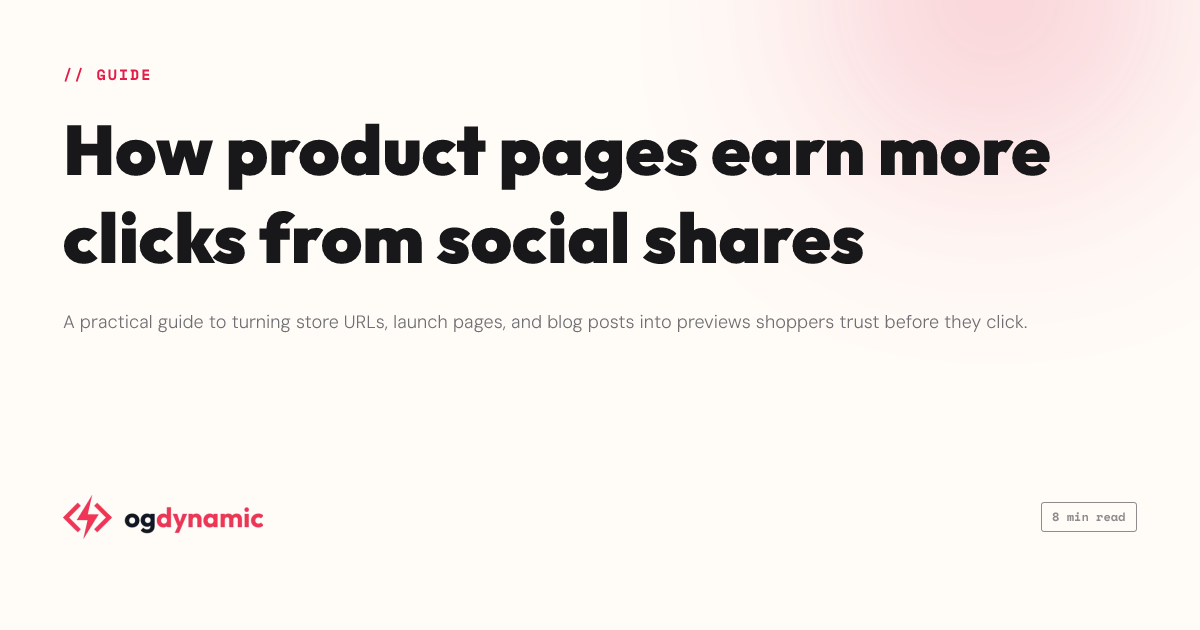
Stop searching for stock photos at publish time. Design one editorial template, wire the title, author, and category fields, and every post gets a matching featured image and social card.
Design once, then render every open graph image generator from a URL.
Create a free account